


If you live in a region where summer feels endless, you already know the struggle. By mid-morning, the sun is intense. By afternoon, indoor spaces start warming up. By evening, your AC is working overtime.
In hot regions, your windows aren’t just decorative features. They’re your first line of defense. That’s where thermal windows completely change the conversation.
Not just for energy savings. Not just for efficiency. But for everyday livability in high-heat environments. Let’s talk about what that really means.
Heat Is Relentless — Your Windows Shouldn’t Be
Homes in warm regions face unique challenges:
- Extended sun exposure
- High UV intensity
- Long cooling seasons
- Temperature spikes well into the evening
- Constant HVAC strain
Standard glass simply isn’t built for that. Homes in extreme temperatures need windows for hot climates that are engineered specifically to reduce heat transfer and maintain indoor stability. When glass isn’t designed for your environment, you feel it immediately:
- Rooms heat up quickly
- Cooling systems cycle constantly
- Certain spaces become uncomfortable during peak sun hours
And over time, that adds up.
What Makes a Window “Thermal”?
Let’s break it down in simple terms. Thermal windows are designed to slow down the transfer of heat between indoors and outdoors. They typically include:
- Multiple panes of glass
- Insulating gas fills
- Advanced coatings
- Tight seals and insulated frames
These components work together to create a barrier against outdoor temperatures. In extremely hot regions, that barrier becomes essential — not optional.
Not All Glass Handles Heat the Same Way
In areas with prolonged sun exposure, glass must do more than just insulate. It must actively resist solar heat gain. That’s why heat resistant windows are critical in warmer states and desert zones.
They’re designed to:
- Reflect infrared heat
- Minimize heat penetration
- Reduce indoor temperature spikes
- Help cooling systems operate more efficiently
Instead of absorbing and transferring solar energy inside, they redirect it outward. And that difference is something homeowners feel immediately.
Sunlight Is Beautiful — Overheating Isn’t
Let’s be clear: nobody wants a dark house. Natural light enhances mood, improves aesthetics, and makes spaces feel open. But without protection, sunlight becomes a liability. Modern sun blocking windows are engineered to filter excessive solar radiation while preserving brightness.
That means:
- No need to keep blinds closed all day
- Less glare on screens
- Reduced fading of floors and furniture
- More balanced interior lighting
You still get the glow. Just without the discomfort.
Desert Living Requires a Different Standard
If you live in regions with desert-like conditions, heat isn’t occasional. It’s constant. Homes in these environments demand windows for desert climates that can handle:
- High daytime temperatures
- Intense UV exposure
- Significant temperature swings between day and night
- Dry air conditions
Standard windows often fail prematurely under these conditions. Seal breakdown. Warping. Performance decline. Investing in climate-appropriate windows ensures your home remains stable year after year — not just season after season.
The Comfort Factor Is Immediate
What homeowners often notice first isn’t the energy bill. It’s how the house feels. With properly designed temperature control windows, you experience:
- More even cooling across rooms
- Fewer hot spots near window walls
- Reduced HVAC strain
- A quieter interior environment
- Greater comfort during peak afternoon hours
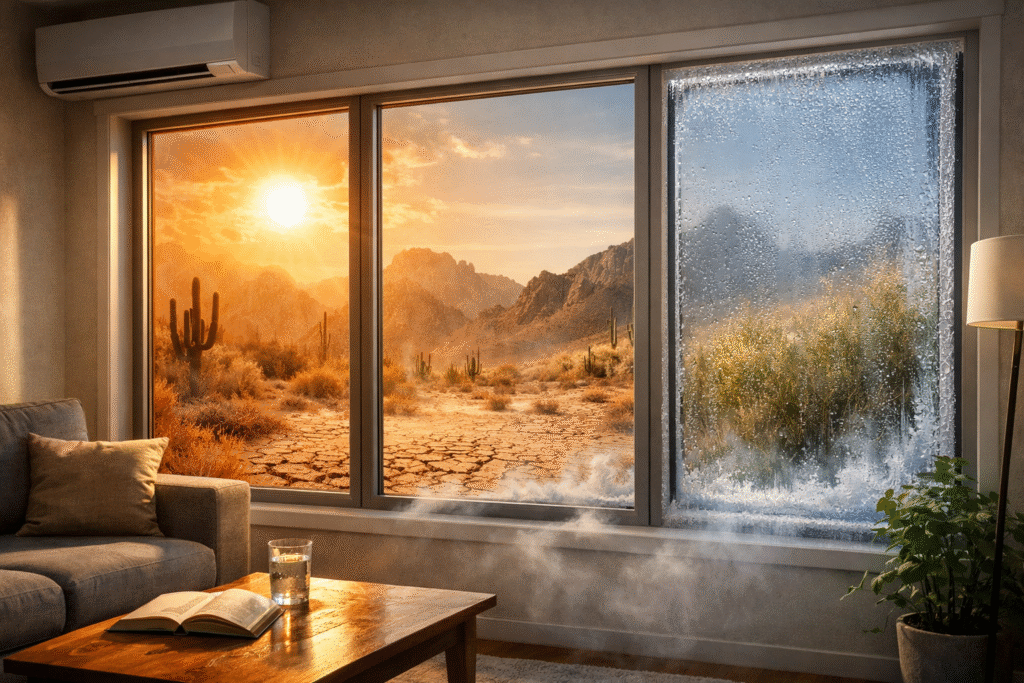
The difference isn’t subtle. It’s physical. You walk into a room at 3 PM and it feels… steady. That’s performance.
The Long-Term Advantage
When your windows are optimized for heat management, you reduce:
- AC overuse
- System wear and tear
- Monthly utility fluctuations
- Long-term maintenance stress
A properly installed energy efficient window helps create a home that works with your climate instead of fighting against it. And in regions where cooling seasons last most of the year, that efficiency compounds over time.
March Is the Smartest Time to Upgrade
Spring is the ideal preparation window before peak heat arrives.
Why act now?
- Installation conditions are more predictable
- You avoid emergency upgrades in extreme heat
- Scheduling is typically more flexible
- You enter summer already prepared
Waiting until July often means rushing decisions when temperatures are already unbearable. Planning in March means proactive comfort.
Benefits for Hot Climate Homeowners
Upgrading to thermal window systems supports:
- Improved indoor temperature stability
- Reduced solar heat gain
- Lower HVAC workload
- Enhanced long-term durability
- Protection against UV damage
- More consistent year-round comfort
- Increased home resale appeal in warm regions
In hot climates, windows aren’t just architectural elements.
They’re climate-control tools.
Why Installation Precision Matters in High Heat
Even the most advanced glass won’t perform correctly without expert installation. In hot environments, sealing precision becomes even more critical.
Improper installation can lead to:
- Air infiltration
- Seal breakdown
- Performance loss
- Increased energy strain
At CITY VIEW WINDOWS, installation is treated as a performance process — not just a construction task. Because in extreme climates, details matter. A lot.
Living Comfortably in a Hot Region Is Possible
You don’t have to accept:
- Rooms that overheat every afternoon
- Skyrocketing cooling bills
- Constant thermostat adjustments
- Blinds permanently closed
The right window system allows your home to remain bright, open, and comfortable — even when outdoor temperatures climb. And once you experience that level of stability, it’s hard to imagine going back.
Conclusion
Homes in extreme heat demand smarter design choices. Windows are one of the most influential factors in how comfortable your home feels throughout long, hot seasons.
Upgrading to high-performance systems built specifically for warm climates transforms not only energy use but daily livability. Instead of fighting the sun, your home begins to manage it intelligently. And when summer arrives, you’ll be ready — not reacting.