
Let’s be honest. Most homeowners don’t wake up one morning thinking, “Today feels like a great day for window replacement.” It usually starts small.
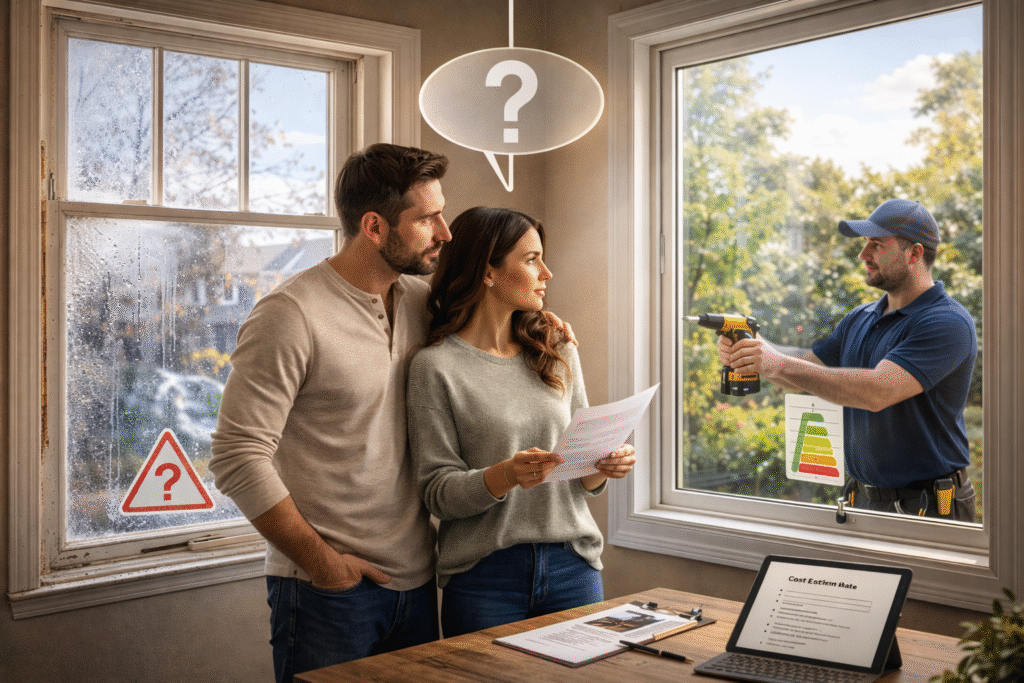
A window that sticks. A strange draft. Condensation you didn’t notice last year. A crack you meant to fix. And then comes the question:
Is this something I can patch… or is it time to move forward? If you’ve been wondering whether your windows are trying to tell you something, this guide is for you.
The Real Question Isn’t If — It’s When
Many homeowners delay upgrades because they’re unsure when to replace windows. The truth is, waiting too long often costs more in the long run.
Here are subtle (but important) signs your windows may be past their prime:
- Difficulty opening or closing
- Visible warping in frames
- Condensation between panes
- Outside noise becoming more noticeable
- Rooms that feel uneven in temperature
- Increasing energy bills without explanation
Windows rarely fail all at once. They decline gradually. Which makes it easy to ignore the warning signs.
The Repair vs. Replace Dilemma
A common first instinct is to look into repairs. And sometimes, that makes sense. But understanding window repair cost in comparison to a full upgrade is where clarity begins.
Repairs can add up quickly:
- Frame restoration
- Seal fixes
- Glass pane replacement
- Hardware adjustments
- Labor fees
Now multiply that by multiple windows over time. In many cases, what feels like a short-term fix becomes an ongoing cycle of expenses. Replacing once — instead of repairing repeatedly — often delivers better long-term value.
Small Damage Isn’t Always Small
A single damaged window might not seem urgent. But windows work as systems. One compromised unit can affect:
- Indoor temperature stability
- Security
- Moisture control
- Energy performance
- Curb appeal
And if one window is failing due to age, chances are others installed at the same time aren’t far behind. Think of it this way:
You wouldn’t replace one worn tire and ignore the rest forever.
Your windows deserve the same logic.
Why March Is a Strategic Time to Decide
Spring isn’t just about cleaning. It’s about assessing. After winter stress and before summer heat, March is one of the smartest months to evaluate your windows.
Here’s why:
- Weather conditions are ideal for installation
- You prepare your home before peak cooling season
- Scheduling is often more flexible than summer months
- You avoid emergency decisions during extreme temperatures
Making a proactive choice now prevents reactive decisions later. And reactive decisions are almost always more expensive.
Beyond Repairs: Exploring Better Options
Modern window solutions aren’t just about fixing problems. They’re about upgrading the entire experience of living in your home.
Today’s options offer:
- Improved noise reduction
- Better insulation
- Smoother operation
- Increased home value
- Enhanced security features
- More modern aesthetics
Sometimes the real upgrade isn’t just replacing what’s broken. It’s elevating how your home feels every single day.
Think of It as a Strategic Upgrade — Not an Expense
Let’s reframe the mindset. Instead of seeing new windows as a cost, consider them a window investment.
Why?
Because they impact:
- Property value
- Energy efficiency
- Monthly utility bills
- Buyer appeal if you plan to sell
- Structural integrity
- Interior comfort
Few home upgrades influence both daily comfort and resale value at the same time. Windows do. And unlike cosmetic updates, their impact isn’t just visual. It’s functional.
The Emotional Factor No One Talks About
There’s also something less measurable — but equally important. Peace of mind. No worrying about drafts during winter. No stressing over warped frames during heavy rain. No second-guessing whether the windows are secure when you’re away.
Reliable windows remove a layer of background stress most homeowners don’t even realize they’re carrying. That quiet confidence matters.
What Professional Support Actually Looks Like
Choosing experienced residential window services makes the process straightforward instead of overwhelming.
The right team will:
- Inspect your current windows honestly
- Explain whether repair or replacement makes more sense
- Provide clear pricing
- Offer style and performance recommendations
- Handle installation with precision
- Ensure proper sealing and finishing
No guesswork. No pressure. Just informed decisions.
Common Myths That Keep Homeowners Stuck
Let’s clear a few things up.
Myth #1: “If it’s not shattered, it’s fine.”
Performance declines long before glass breaks.
Myth #2: “Repairs are always cheaper.”
Repeated repairs can exceed replacement costs over time.
Myth #3: “It’s too disruptive.”
Professional installations are faster and cleaner than most homeowners expect.
Myth #4: “I’ll wait another year.”
Delays often mean higher energy costs and potential structural damage.
Sometimes the biggest cost is postponing the inevitable.
Signs You’re Ready — Even If You Haven’t Admitted It Yet
You might be ready for an upgrade if:
- You’ve repaired the same window more than once
- You feel temperature differences near windows
- You notice rising utility bills
- You’re planning other home renovations
- You’re thinking about selling within the next few years
- Your windows are 15–25 years old
At some point, maintenance turns into replacement. And recognizing that shift is what smart homeowners do.
Why CITY VIEW WINDOWS Makes the Difference
Upgrading your windows isn’t just about products. It’s about precision.
At CITY VIEW WINDOWS, the focus isn’t just installing new units — it’s ensuring they perform the way they’re designed to.
From consultation to final sealing, every step is handled with care. Because the goal isn’t just replacing glass. It’s upgrading your home experience.
Conclusion
Windows rarely demand attention dramatically. They age quietly, decline gradually, and signal subtly that something isn’t working the way it should.
Choosing to upgrade is about more than fixing what’s broken. It’s about making a proactive decision that protects your home, improves daily comfort, and strengthens long-term value.
When you step back and look at the bigger picture, the smart move becomes clear.
And once it’s done, you’ll wonder why you waited so long.